Co-Designing the University Canteen Experience
Participatory Design & Qualitative UX Research Study
Problem & Target Users
International students and university newcomers face navigation hurdles, language barriers, opaque payment rules, and social friction in crowded campus dining halls.
My Role
UX Research & Workshop Co-Facilitation
Academic research team. I contributed to the workshop structure and agenda, refined activity instructions, facilitated small-group discussions and documented observations during the sessions.
Project Type & Context
Academic Research · Participatory Design · 2 Iterative Workshops (~30 Students)
Methods & Activities
01 Overview & The Challenge
University canteens are fast-paced, high-density service environments where students must balance strict academic schedules, crowded spaces, and complex self-service workflows. For international students and university newcomers, this routine experience often becomes an unexpected source of daily friction—marked by language barriers, unclear combo meal rules, and opaque payment systems.
Our research team initially set out to explore an emerging technology-driven question: could assistive social robots meaningfully support international students and newcomers during their dining journey?
However, rather than proceeding with technology-first assumptions, we recognized the essential need to understand the authentic, everyday lived experience of students first. Before introducing automated or robotic interventions, we needed to know: what fundamental service breakdowns actually matter most to students?
“Can assistive social robots meaningfully ease campus dining challenges for international newcomers, or do students face foundational service and communication barriers that require simpler, human-centered improvements first?”
University of Trento student canteen during peak 90-minute lunch shifts. High auditory noise, fast-moving queues, and rapid turnarounds between lectures.
A participatory inquiry approach treating students as active co-designers rather than passive respondents, interrogating assumptions before proposing interventions.
02 User Research & Key Insights
To ground our understanding in empirical behavior, our team conducted 5 ethnographic field observations during peak lunch rushes and qualitative contextual inquiries with student diners. The research revealed that student friction clustered around four core themes:
Navigation & Spatial Signage
Ambiguous queue lines, entrance/exit bottlenecks, and absent directional markers during peak rush hours.
Menu & Dietary Information
Untranslated Italian menus, missing vegetarian/vegan indicators, and confusing meal combination pricing formulas.
Ordering & Payment Procedures
Complex app wallet recharging, unexpected commission fees, and separate confusing queues for pizza vs. hot dishes.
Social Comfort & Inclusion
Social hesitation for solo international diners, fear of holding up fast queues, and stress locating open table seats.
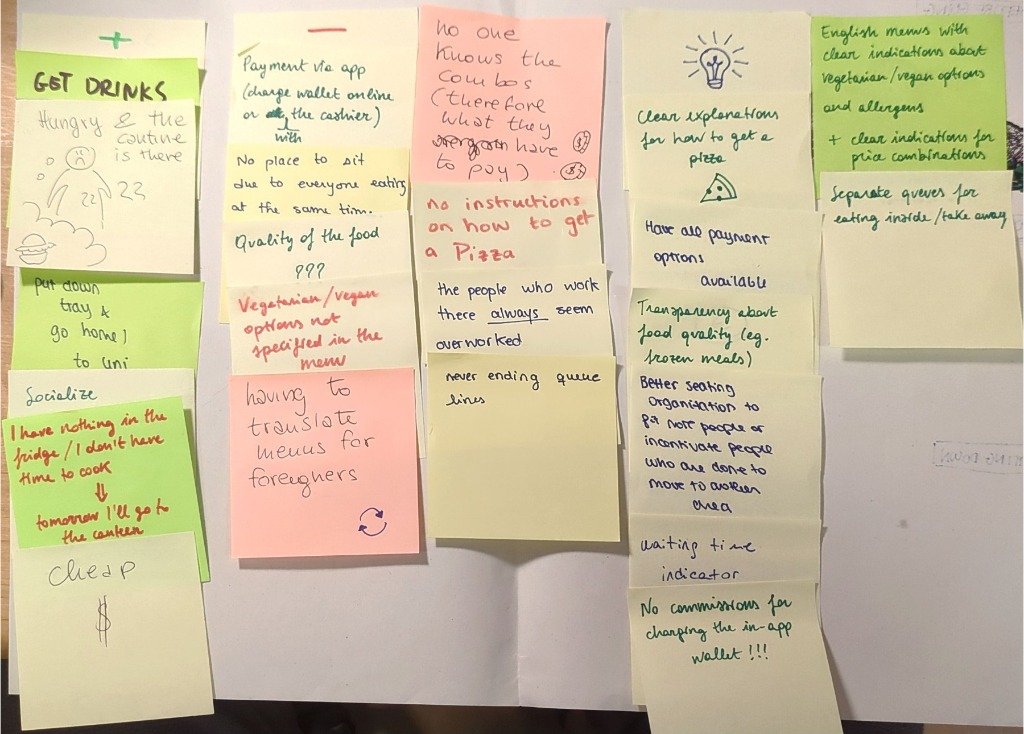
Figure 01: Qualitative mapping of student touchpoints and pain points—highlighting language barriers, combo pricing confusion, and peak-hour queue bottlenecks.
An international student entered the self-service line without looking at the overhead menu board. She closely shadowed the student ahead, mirroring their movements to select trays and cutlery. When reaching the hot counter, she pointed silently at a pasta dish rather than asking staff about ingredients or pricing.
When service documentation and multilingual signage are absent, newcomers rely heavily on social imitation and silent workarounds—masking persistent anxiety rather than resolving it.
03 Participatory Workshops & Co-Design
To uncover underlying student priorities, our team facilitated two participatory design workshops with approximately 30 students, bringing together international exchange students, full-degree candidates, and university newcomers.
Three Collaborative Co-Design Activities
Persona-Based Scenarios
Participants analyzed authentic archetypes (Sofia, Aisha, Karl) navigating dietary limits, language gaps, and rushed lunch breaks.
Journey Mapping & Pain Points
Tracing the full dining arc from entering to dish return, mapping emotional highs and pin-pointing friction bottlenecks.
Collaborative Idea Evaluation
Teams generated low-fidelity sketches and evaluated candidate concepts across structured Pros, Cons, and Feasibility criteria.
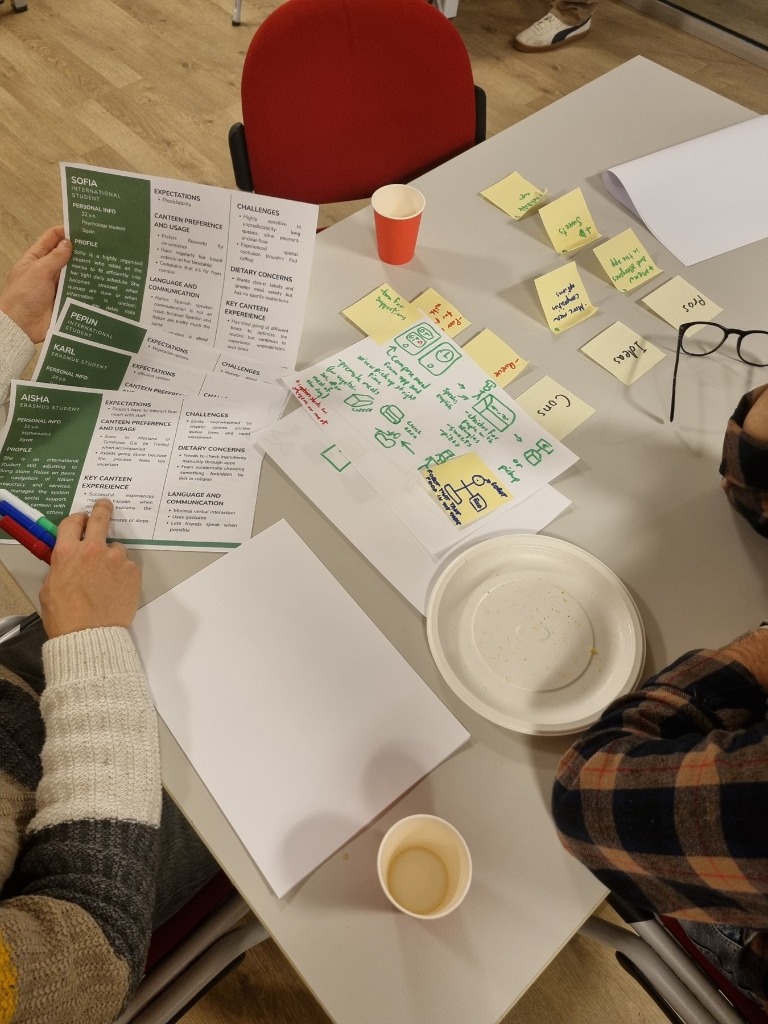
Figure 03: Persona-based co-design activity with printed user profiles (Sofia & Aisha), spatial sketches, and participant notes.
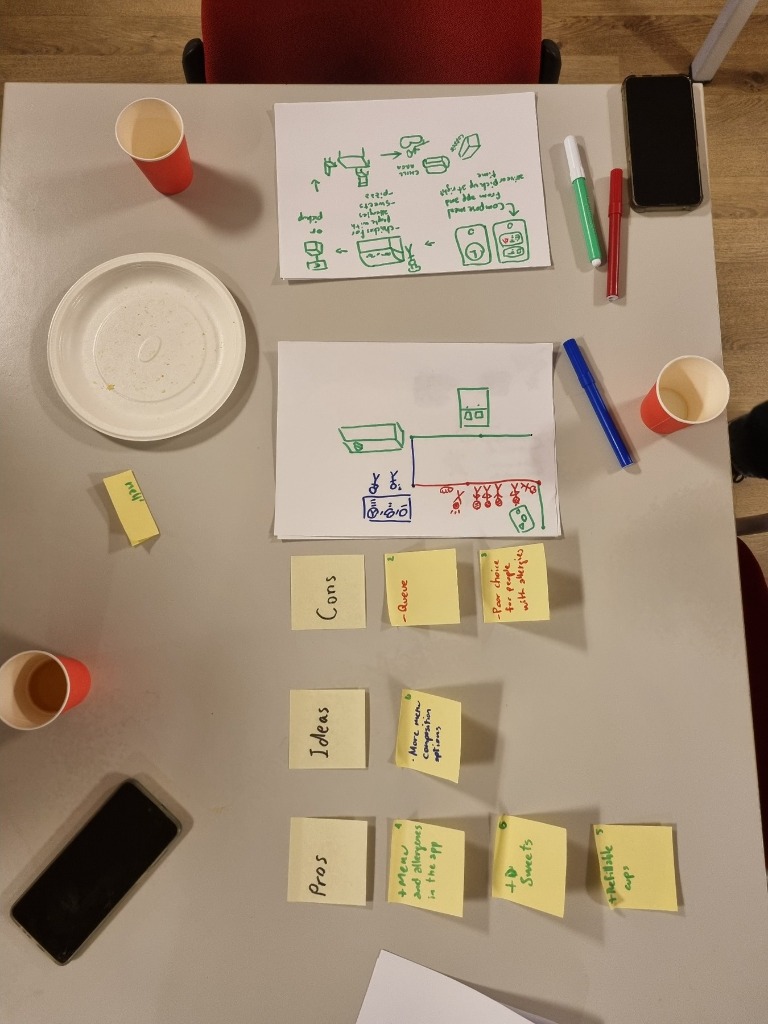
Figure 04: Structured idea evaluation activity categorizing candidate interventions into pros, cons, and feasibility notes.
04 Workshop Iteration & Facilitation
Co-design is an empirical method that requires ongoing methodological reflection. Following the first workshop, our research team reviewed participant feedback, timing logs, and facilitation challenges to introduce tangible improvements for the second session:
Smaller Discussion Pods
Reduced group size from 6–7 students to 4–5 participants, preventing louder participants from dominating and giving quieter international students space to speak.
Scaffolded Step-by-Step Prompts
Replaced multi-stage open exercises with concrete bite-sized prompts, visual agenda milestones, and clearly designated time checkpoints.
Dedicated Silent Brainstorming
Allocated 3 minutes of silent sticky-note drafting prior to group discussion, allowing non-native English speakers time to formulate ideas without conversational pressure.
“I contributed to the workshop structure and agenda, refined activity instructions, facilitated small-group discussions and documented observations during the sessions.”
While overarching research objectives, persona development, and thematic synthesis were collaborative team efforts, my personal focus centered on crafting accessible exercise briefs, ensuring inclusive facilitation in small groups, and capturing nuanced participant interactions in real time.
Participant Workshop Feedback Evolution
Instruction Clarity & Time AdequacyBroader prompts and larger breakout groups; participants reported occasional time pressure and minor instruction ambiguity.
Refined step-by-step scaffolding, smaller pods (4–5 students), and dedicated silent ideation before group debates.
Note: Ratings reflect participant evaluations of the workshop experience (clarity of activity guidelines and pacing adequacy across sessions, n = 30), NOT measured canteen usability.
05 Outcomes & Reflections
Questioning Technology-First Assumptions: Why Fundamentals Matter Most
When asked to evaluate potential interventions—including the original premise of social robots assisting diners—participants consistently and clearly deprioritized robotic assistants. Students expressed that social robots in a fast-paced canteen would likely worsen congestion, feel intrusive, and fail to solve basic informational bottlenecks.
Instead, participants overwhelmingly advocated for foundational service improvements:
Bilingual Menus & Dietary Clarity: Clear English descriptions, transparent allergen icons, and vegetarian/vegan labeling.
Transparent Pricing: Clear upfront combo rules to eliminate surprise charges at the register.
Queue Management: Physical/visual separation between sit-down meal trays and rapid takeaway pickups.
Real-Time Waiting Indicators: Glanceable crowd monitors to help students schedule lunch around lecture gaps.
The Power of Questioning Tech Assumptions
Starting with a preconceived technology (“how can we deploy social robots here?”) risks designing for novelty rather than genuine need. Rigorous qualitative research demonstrated that genuine innovation lies in resolving real user friction with the most direct, elegant means possible.
Designing With Users, Not Just For Them
Engaging international students as co-researchers rather than test subjects uncovered emotional nuances—such as the quiet shame of holding up queues or dietary exclusion—that abstract design assumptions or broad quantitative surveys would never have revealed.
Exploratory academic study conducted with approximately 30 convenience-sampled students across two workshops. While the research produced grounded qualitative insights and prioritized service interventions, no canteen redesign was implemented or validated in production with university dining management.